If you’re responsible for driving pipeline growth, you’ve probably felt that generating high-quality leads is getting harder. Buyers are more informed, inboxes are overcrowded, and traditional outreach tactics such as cold emails, generic LinkedIn messages, and even once-reliable campaigns often fall flat.
In the Australian B2B landscape, this challenge is especially clear. Your prospects are doing more research on their own, engaging with content across multiple channels, and delaying conversations with sales until they feel confident in their options. Meanwhile, your sales and marketing teams are under pressure to deliver results, often with limited time, fragmented data, and inconsistent follow-up.
It’s why many organisations turn to outsourcing B2B lead generation services to support pipeline growth. Yet even then, common challenges remain: low engagement, long sales cycles, and leads that look promising on paper but rarely convert.
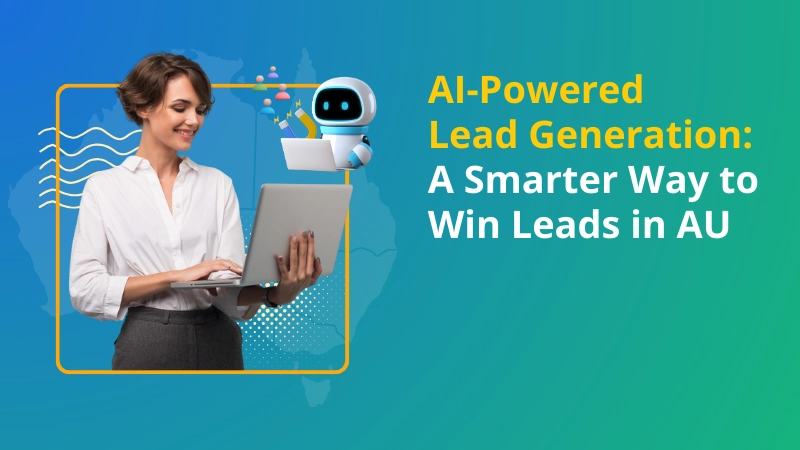
This is where AI-powered lead generation starts to change the conversation.
Rather than relying on volume-based outreach or guesswork, AI offers a more intelligent way to identify the right prospects, personalise engagement, and support your team across the entire buyer journey, without losing the human touch that builds trust. In fact, according to HubSpot’s State of Generative AI Report, 95% of marketers using generative AI for email creation say it’s effective, with more than half rating it as very effective.
But what does AI-powered lead generation actually involve? And how can it realistically help Australian businesses like yours generate better leads, not just more of them?
Let’s take a closer look.
Lead generation just got a serious upgrade.
What Is AI-Powered Lead Generation?
At its simplest, AI-powered lead generation uses artificial intelligence to help you identify, qualify, and engage potential buyers more intelligently throughout the sales funnel. Instead of relying purely on manual research, static lists, or intuition, AI analyses large volumes of data to help you make better decisions about who to target, when to engage them, and how to personalise your outreach.
Unlike traditional automation, AI-driven lead generation adapts over time. It learns from engagement patterns, buyer behaviour, and historical outcomes to continuously refine lead identification and lead scoring. This is especially valuable in B2B environments where buying decisions involve multiple stakeholders and longer sales cycles.
The growing adoption of AI reflects this shift.
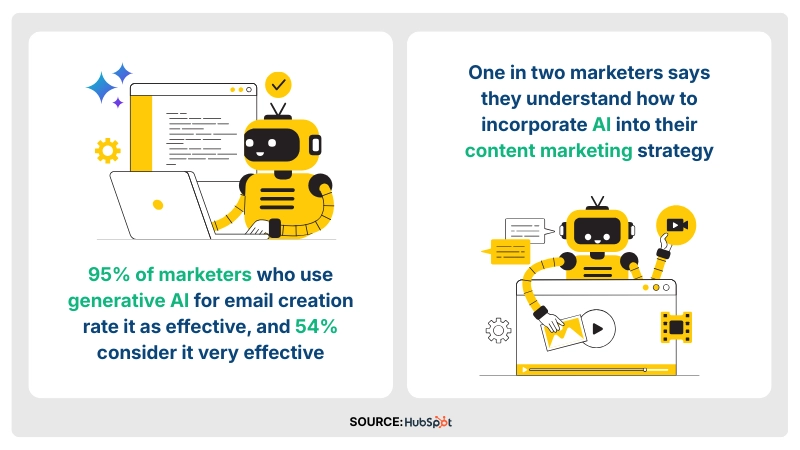
According to HubSpot, 95% of marketers who use generative AI for email creation rate it as effective, while 54% consider it very effective. At the same time, nearly one in two marketers say they understand how to incorporate AI into their content marketing strategy, signalling that AI is moving from experimentation into everyday execution.
In practice, AI-powered lead generation supports activities such as:
- Lead identification based on firmographic and behavioural data
- Predictive lead scoring to prioritise sales-ready opportunities
- Hyper-personalised outreach using natural language processing (NLP)
- Ongoing lead nurturing across multiple channels
Rather than replacing human decision-making, AI serves as an intelligence layer, helping you focus your time and effort where they matter most.
See how Callbox AI-Powered Lead Generation drives growth for a Cloud Provider in Australia
Top AI Lead Generation Tools for 2026
As AI adoption accelerates, the number of AI lead generation tools continues to grow. While features vary, most platforms fall into several key categories that support different stages of the buyer journey, both outbound and inbound.
| Tool Category | Primary Purpose | How AI Is Used | Best For |
| Sales Intelligence & Data Platforms | Lead identification and data enrichment | Uses machine learning and intent data to identify decision-makers, enrich contact records, and prioritise target accounts | Early-stage targeting, account research, ABM |
| Outbound Outreach Tools | Email and LinkedIn prospecting | Applies AI for email personalisation, send-time optimisation, sequence testing, and response prediction | AI-powered email outreach, AI LinkedIn outreach, outbound prospecting |
| Inbound / Web-Based AI Tools | Capturing and qualifying inbound demand | Analyses website behaviour, triggers chat or forms, and routes leads based on intent and engagement | High-intent website visitors, inbound lead capture, demand generation |
| Conversational AI & Chatbots | Real-time engagement and qualification | Uses NLP to answer questions, qualify leads, and guide prospects to next steps | Website chat, conversational lead capture, self-directed buyers |
| CRM & Marketing Platforms | Lead management and pipeline visibility | Supports predictive lead scoring, sales pipeline automation, and performance insights | AI lead management, RevOps alignment, reporting |
| Marketing Automation & Nurture Tools | Lead nurturing across the funnel | Automates follow-ups, adapts content based on behaviour, and supports MOFU/BOFU journeys | Lead qualification, nurture campaigns, sales cycle optimisation |
Sales Intelligence and Data Platforms
Tools such as Apollo.io, Cognism, ZoomInfo, and Lusha use AI to support lead identification, data enrichment, and account research. These platforms help you uncover decision-makers faster by combining first-party and third-party data with intent signals, making early-stage targeting more precise and data-driven.
Outbound Outreach and Engagement Tools
AI-powered email and LinkedIn outreach tools such as Instantly.ai or Smartlead focus on AI-powered email outreach, AI LinkedIn outreach, and automated follow-up sequences. Their goal is to optimise timing, personalisation, and cadence so your outreach feels relevant rather than repetitive, while improving response rates without increasing manual effort.
Explore key insights about email marketing in Australia

Inbound and Web-Based AI Tools
Inbound and web AI tools focus on capturing and qualifying demand that already exists. These include AI-powered website chatbots, smart forms, behavioural tracking, and web personalisation tools that adapt content based on visitor intent.
By analysing on-site behaviour, such as page visits, content engagement, and repeat sessions, AI can help you:
- Identify high-intent website visitors
- Trigger timely conversations via chat or forms
- Route inbound leads to the right nurture or sales path
This makes inbound AI a critical complement to outbound efforts, especially for Australian buyers who prefer to research independently before engaging.
CRM and Marketing Platforms
Platforms like HubSpot and Salesforce increasingly embed AI lead management capabilities directly into CRM workflows. These include predictive lead scoring, sales pipeline automation, and performance insights that connect marketing activity to revenue outcomes.
Conversational AI and Chatbots
Conversational AI tools support real-time, two-way engagement across websites and landing pages. Using natural language processing (NLP), AI chatbots can qualify inbound leads, answer common questions, and guide prospects to the right next step without friction.
The most effective setups don’t rely on a single tool. Instead, they combine outbound, inbound, web, CRM, and conversational AI into a cohesive multichannel lead generation strategy, allowing you to engage buyers wherever and however they choose to interact.
Explore more AI tools best for small and mid-sized businesses in ANZ
AI Lead Generation Strategies for the Australian Market
AI-powered lead generation isn’t a one-size-fits-all solution, particularly in Australia. Local buyers tend to value credibility, relevance, and transparency, making a thoughtful strategy essential.
To make AI work in your favour, consider these principles:
- Use AI to support data-driven lead generation, not mass outreach
- Focus on quality over volume, especially for high-value B2B accounts
- Apply AI insights to account-based marketing (ABM) strategies
- Combine AI automation with human judgment and contextual awareness
AI performs best when it enhances your understanding of buyer intent rather than pushing messages faster than prospects are ready to receive them.
Tell us what your team is missing—we’ll handle the rest.
How to Choose the Best AI Lead Generation Platform
Now, you might ask: How do I choose the best AI lead generation platform that integrates with my CRM and marketing stack?
With so many tools available, choosing the right platform can feel overwhelming. Instead of focusing on feature lists alone, it’s more useful to assess how well a platform fits into your existing ecosystem.
Key questions to ask include:
- Does it support CRM integration with your current marketing stack?
- Can it align with your lead qualification and sales processes?
- Does it provide visibility across TOFU, MOFU, and BOFU stages?
- Can it adapt to changes in your pipeline and revenue operations?
Platforms that integrate seamlessly with your CRM and marketing tools tend to deliver stronger long-term value, as they reduce friction between marketing and sales while improving reporting accuracy.
What are the Key Benefits of Using AI-Powered Tools in Your Business
When implemented thoughtfully, AI-powered lead generation offers benefits that go beyond efficiency gains.
You may see improvements in:
- Lead quality, driven by predictive lead scoring
- Sales cycle optimisation, through better timing and relevance
- Pipeline acceleration, by prioritising accounts with active intent
- Consistency, via automated follow-up sequences
- Team alignment, through shared data and insights
It’s telling that one in two writers now use AI tools to improve content performance, highlighting how AI supports human output rather than replacing it.
Supercharge your B2B growth with AI-driven human teams.
Can AI Help with LinkedIn Outreach and Email Campaigns Without Sounding Spammy?
This is one of the most common and valid concerns. Poorly executed automation can quickly damage trust.
However, AI-driven sales engagement can actually reduce spamminess when used correctly. AI enables:
- Hyper-personalised outreach based on role, industry, and intent
- Smarter sequencing across email and LinkedIn
- Adaptive messaging informed by engagement behaviour
- Spam-safe AI outreach that respects timing and frequency
The difference lies in intent. AI should help you sound more relevant and human, not more aggressive.
How AI Lead Generation Works Across the Funnel
AI supports every stage of the buyer journey, not just initial prospecting:
- Top-of-Funnel (TOFU): Lead identification, audience segmentation, content targeting
- Middle-of-Funnel (MOFU): Lead qualification, nurturing, predictive lead scoring
- Bottom-of-Funnel (BOFU): Sales pipeline automation, prioritisation, conversion support
This funnel-wide impact is why many organisations now view AI B2B lead generation as a revenue enabler rather than a marketing tool.
AI Lead Generation and Data Privacy in Australia
Data privacy remains a critical consideration. Any AI lead generation strategy must comply with the Australian Privacy Act and global standards such as GDPR when operating across regions.
When evaluating tools, ensure that:
- Your data sources are transparent and compliant
- Your consent and opt-out mechanisms are clearly supported
- Your AI models align with ethical data usage principles
Trust isn’t just a legal requirement; it’s a competitive advantage.
Is AI Lead Generation Worth It for Australian Businesses?
AI isn’t a silver bullet. It won’t fix broken processes or replace relationship-building. But when used strategically, AI lead generation can significantly improve how you identify opportunities, prioritise effort, and engage buyers.
For Australian businesses facing tighter competition and longer buying cycles, AI offers a practical way to work smarter—without sacrificing authenticity.
Explore common reasons why AI Lead Generation fails.
The Future of AI-Powered Lead Generation
Looking ahead, you can expect AI-powered lead generation to evolve through:
- Greater use of agentic AI and autonomous AI agents
- Deeper collaboration between AI SDRs and human teams
- Tighter integration with CRM, marketing, and RevOps platforms
- Increased focus on relevance, trust, and long-term value
Many organisations have become so focused on efficiency that they’ve lost sight of what truly connects with buyers: understanding, empathy, and relevance. The future of AI-powered lead generation lies in using technology to bring those human qualities back into scale.
Our AI-powered human teams ensure continuous B2B performance.
Frequently Asked Questions About AI-Powered Lead Generation
What is AI-powered lead generation?
It uses artificial intelligence to identify, qualify, and engage prospects more intelligently across the sales funnel.
How does AI lead generation work?
AI analyses data signals, predicts intent, personalises outreach, and supports lead scoring and nurturing.
Does AI improve lead quality?
Yes, when paired with human oversight, AI-driven lead generation often improves relevance and conversion readiness.
Can AI replace SDRs?
No. AI supports SDRs by removing manual tasks and improving focus, but human interaction remains essential.
Is AI lead generation compliant with Australian privacy laws?
It can be, provided the tools and processes comply with Australian and international data protection requirements.