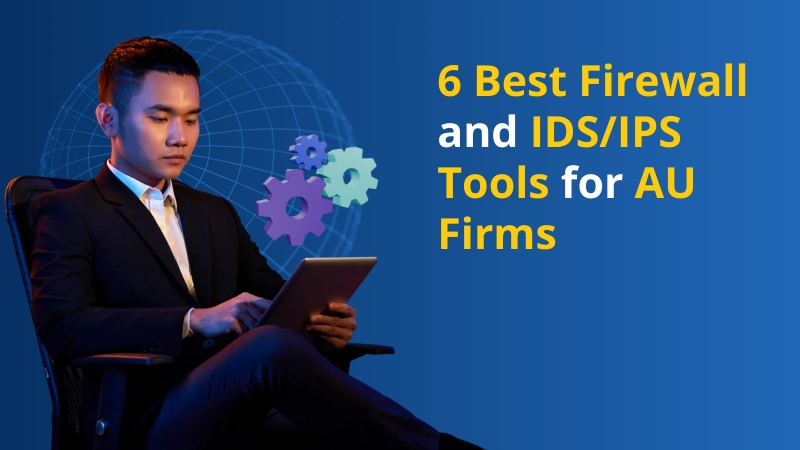
Australian organisations face a growing stream of cyber risks—from ransomware to advanced phishing attacks to cloud configuration errors. With stronger digital connectivity and remote work now the norm, many firms need reliable ways to secure their networks and reduce blind spots. This makes firewall tools and intrusion systems essential foundations for business protection.
If you run IT, operations, or a cybersecurity function in Australia, you already understand how difficult it is to sort through countless vendors, tools, and technologies. That’s exactly why this guide focuses on six proven options that work well for firms of different sizes. Before we get into the technologies, this blog also helps local businesses generate high-quality network security leads or connect with new clients seeking network security solutions—especially useful for companies selling cybersecurity services in Australia.
Whether you are researching the top network security companies for benchmarking or evaluating the top network security tools for your own tech stack, this overview will give you a strong starting point.
What Firewalls and IDS/IPS Tools Actually Do
Firewalls remain the first line of defence. They filter traffic, block unauthorised access, enforce rules, and help maintain a secure network architecture. But modern environments need more than basic filtering. Because attacks evolve constantly, Australian companies rely on multiple layers of defence to detect and stop threats in real time.
That’s where IDS and IPS come in.
- An intrusion detection system alerts your team when it sees suspicious behaviour.
- An intrusion prevention system takes the next step—it blocks or stops harmful activity before it causes damage.
Together, these tools improve visibility, strengthen compliance, and help Australian organisations safeguard data, customers, and operations. They also support teams offering lead generation services for network security companies in Australia, because firms with strong tools tend to attract decision makers looking for reliable partners.
Want to connect with Australian firms seeking firewall & IDS solutions?
Key Features Australian Firms Should Look For
1. Real-time threat intelligence
Tools with real-time intelligence update continuously to catch new malware and emerging threats before they spread. This helps Australian firms stay protected against fast-changing attack patterns targeting local businesses.
2. Deep packet inspection
Deep packet inspection lets the system analyse traffic beyond basic headers to uncover hidden or encrypted threats. It provides a stronger security layer for environments handling sensitive data or high-volume traffic.
3. Cloud and hybrid support
Modern Australian organisations often run workloads across AWS, Azure, or private cloud, so tools must integrate seamlessly with these platforms. Consistent policy enforcement across cloud and on-prem systems prevents gaps that attackers can exploit.
4. Zero-trust alignment
Zero-trust models require every user and device to authenticate before accessing resources, reducing the risk of internal breaches. Tools aligned with zero trust make it easier to control access and limit lateral movement.
5. Reporting and compliance fit
Businesses with audit obligations need tools that generate detailed logs and compliance-ready reports. Built-in templates and SIEM integrations help firms meet Essential Eight, PCI-DSS, or ISO requirements more easily.
6. Performance and ease of management
High-speed inspection and efficient rule handling keep networks running smoothly without slowing operations. User-friendly dashboards and automation also reduce manual workload for busy IT teams.
See how a Cybersecurity Business increased its sales across ANZ.
The 6 Best Firewall and IDS/IPS Tools for AU Firms
Below are six solutions that work well for Australian organisations—from SMEs to large enterprises.
1. Fortinet FortiGate (Firewall + IPS)
Fortinet remains one of the most widely used security vendors across Australia. Their FortiGate series combines firewall capability with intrusion prevention, giving companies strong protection in a single platform. FortiGate’s speed, stability, and good pricing make it popular with mid-market and enterprise teams.

Best for: Mid-size to large businesses that want scalable security across on-prem, cloud, and hybrid environments.
Key strengths:
- Built-in IPS, sandboxing, URL filtering, and threat analytics
- High-performance next-gen firewall capabilities
- Strong integration with Fortinet’s wider ecosystem
- Easy deployment across branches or remote offices
Because of its broad visibility, many network security companies and MSSPs use FortiGate internally and as part of their client offerings.
2. Palo Alto Networks Next-Generation Firewall
Palo Alto is a top choice for firms that need very precise control and visibility. Their App-ID feature identifies applications based on behaviour, not ports, making it harder for attackers to disguise harmful traffic.

Best for: Regulated industries, financial services, government agencies, and organisations with advanced monitoring needs.
Key strengths:
- Industry-leading threat intelligence
- Real-time network traffic analysis
- Deep user and device control
- Strong resilience against zero-day attacks
This firewall stands out for organisations that want to stay ahead of sophisticated threats and maintain strong governance.
3. Cisco Firepower Threat Defense
Cisco Firepower combines solid firewall protection with detailed IPS rules, giving technical teams actionable insights they can use right away. Cisco’s analytics engine also helps teams identify malicious behaviour with high accuracy.

Best for: Enterprise companies or firms already using Cisco infrastructure.
Key strengths:
- Detailed IPS policies
- Strong malware defence
- Automated correlation and prioritisation of incidents
- Optional integration with Cisco SecureX for visibility across endpoints and cloud
Cisco Firepower is especially valuable for internal teams that need reliable, predictable results.
4. Sophos Firewall + XGS Platform
Sophos sits in the sweet spot between power and simplicity. The Sophos Firewall includes deep inspection, traffic shaping, web filtering, and IPS—all combined into an easy-to-manage interface.

Best for: SMEs, growing companies, and MSPs.
Key strengths:
- Synchronized Security: integrates with Sophos Endpoint
- Easy deployment through templates
- Good dashboards for ongoing monitoring
- Flexible pricing
For teams that value usability without compromising security, Sophos is a strong Australian-friendly option.
5. Trend Micro TippingPoint (IDS/IPS)
Trend Micro TippingPoint specialises in intrusion prevention rather than firewalling. It has very accurate threat detection, which reduces false positives and helps teams focus on real risks.

Best for: Organisations needing high IPS performance, especially in data centres or high-traffic networks.
Key strengths:
- Strong IPS signatures
- Advanced vulnerability shielding
- Real-time threat intelligence
This tool is particularly effective for companies with dedicated security operations teams.
6. Snort or Suricata (Open-source IDS)
For technical teams or organisations with in-house expertise, open-source IDS tools like Snort and Suricata offer flexible and budget-friendly options. These tools let you customise detection rules and integrate with your existing stack.

Best for: Tech-savvy companies, SOC teams, or organisations wanting custom rule creation.
Key strengths:
- Highly customisable
- Cost-effective
- Extremely active global community
- Works well with SIEM and SOC tools
Compared to paid products, these require more hands-on management, but they offer unmatched flexibility.
Let Callbox help your company get featured — and get leads from enterprise clients.
How to Choose the Right Tool for Your Firm
Choosing the right firewall or IDS/IPS tool depends on how your business operates today and how you expect it to grow. Consider the following factors to make a confident and future-ready decision:
1. How big is your environment?
Larger networks with multiple sites, cloud workloads, or remote teams need higher throughput, clustering, and centralised management. Smaller organisations can choose lighter tools, but should still plan for expected growth.
2. Are you cloud-first or hybrid?
Cloud-first firms benefit from firewalls and IPS tools that integrate natively with AWS, Azure, or GCP. Hybrid companies should prioritise unified visibility so policies stay consistent across all environments.
3. What skills does your team have?
Highly technical products work best when you have security specialists who can tune rules and manage configurations. Lean IT teams may prefer tools with automation, templates, and simpler dashboards.
4. Do you have compliance or audit requirements?
If your industry requires strict audits or reporting, choose tools with built-in compliance logging and SIEM integration. Pre-configured policies for Essential Eight or ISO standards can reduce manual work.
5. What’s your security roadmap?
Choose a tool that supports future plans like zero trust, automation, secure SD-WAN, or micro-segmentation. Planning ahead prevents expensive replacements and keeps your security architecture adaptable.
Why These Tools Work Well for the Australian Market
Australia’s cybersecurity challenges have unique factors—geographic spread, high cloud adoption, and strong privacy expectations. Tools that offer cloud integration, easy management, and precise analytics help local organisations remain more resilient.
Several of these solutions also support network access control solutions, network protection software, and firewall solutions that work across industries. Whether a firm is in finance, logistics, healthcare, energy, or retail, visibility and consistent policy enforcement remain essential for defence.
With threats increasing, more companies choose partners who can strengthen their cyber postures and use smart tools to detect threats early. This also means Australian technology firms need ways to generate high-quality network security leads and connect with new clients seeking network security solutions—especially as more organisations look for reliable vendors, integrators, and consulting partners.
Read our full guide and learn how to generate leads for Cybersecurity Companies in Australia
Marketing Considerations for Network Security Companies in Australia
If you’re a vendor, MSP, or IT provider selling cyber solutions, the Australian tech buying landscape relies heavily on credibility. Whether you want to find new leads, increase marketing reach, or build a stronger b2b sales pipeline, understanding buyer expectations is key.
Here’s how firewall and intrusion tools help in sales and marketing:
1. Stronger Positioning for Sales Outreach
Using industry-leading tools helps create more trust during sales outreach, sales enablement, and customer acquisition activities.
2. Better Conversion with Decision Makers
Australian IT buyers are technical. Demonstrating real-world benefits from recognised brands helps you convert qualified leads faster.
3. Improved Lead Nurturing and Market Expansion
The more advanced your tech stack, the easier it is for marketing teams to find new clients, run lead nurturing workflows, and open doors for market expansion.
Companies also benefit from outsourced options like lead generation and appointment setting services—especially when trying to meet enterprise clients or book more discovery meetings. Tools like these help attract sales qualified leads, improve lead qualification, and support sales acceleration efforts across the Australian market.
Even traditional channels like cold calling, sales leads, and sales meeting outreach work better when your offering includes recognised tools endorsed by known network security vendors.
Turn interest into qualified leads
Choosing the Right Protection for Your Business
Cyber risks continue to evolve, and Australian firms must adopt strong, reliable tools that provide visibility, threat detection, and real-time prevention. The six firewall and IDS/IPS platforms in this list represent trusted, widely adopted solutions that help organisations stay protected and maintain operational resilience.
Whether you need a powerful next-generation firewall, a dedicated intrusion prevention system, or flexible open-source tools, the key is choosing a solution that aligns with your team structure, growth plans, and security goals. As threats grow more sophisticated, businesses will continue turning to reputable providers, strong tools, and expert partners to stay ahead. This also creates opportunities for security firms to connect with new clients seeking network security solutions and generate high-quality network security leads through specialised marketing support and targeted outreach.
If your company aims to strengthen its security posture, explore one of these six solutions and assess how they fit your environment. And if you offer cybersecurity services, align your technology and marketing strategy so your firm stands out in a crowded, competitive space.