

Learning how to get meetings with C-suite executives in Australia starts with one truth. Your outreach is competing against a hundred other messages that all sound the same. Enterprise decision-makers across Sydney, Melbourne, and Brisbane are more guarded than ever. Generic pitches rarely make it past the inbox, let alone onto a calendar.
That doesn’t mean these buyers are unreachable. It just means the old approach doesn’t carry the same weight it used to. A cold email followed by a follow-up call isn’t enough on its own anymore. The Australian B2B teams who book these meetings consistently tend to do a few things differently. They put in the research before they ever hit send. They make the first message feel specific rather than templated. And rather than treating the executive assistant as a hurdle, they work with them. This is the same approach behind effective enterprise appointment setting in the Australian market.
Quick Answer:
Booking meetings with guarded C-suite buyers in Australia takes research-led, multi-channel outreach. Anchor it to a real business trigger, not a generic pitch. The strongest sequence combines a personalised email, a LinkedIn touch, and a phone call across 6 to 8 touchpoints. Treat the executive assistant as a partner, not a barrier.
This guide covers why C-suite buyers in Australia have gotten so much harder to reach, and what actually makes them say yes to a meeting. It also breaks down six tactics you can start using this quarter.
Not sure your outreach is landing with AU executives right now?
Why Enterprise C-Suite Buyers in Australia Are Harder to Reach
Executive inboxes have basically turned into a battlefield. Chief executives and CFOs across the ASX 200, and plenty of companies below it, are fielding a nonstop stream of vendor pitches. Most of that gets deleted, filtered out, or handed off to an assistant without a second look.
Executives Receive 100+ Unsolicited Messages per Week
Senior leaders at Australian enterprises routinely receive well over 100 unsolicited emails and LinkedIn messages each week. The bar for what earns a reply has risen sharply. A message needs to show relevance in the first two sentences, or it’s gone.
The gatekeeper problem: EAs, spam filters, and inbox fatigue
Executive assistants filter most inbound requests before an executive ever sees them. Spam filters catch generic, templated language automatically. And inbox fatigue means even messages that land often go unread. Outreach that isn’t built to clear all three layers rarely gets a chance.
Why generic outreach fails at the executive level
Templated pitches fail fast. They signal, immediately, that the sender hasn’t done any homework. Australian C-suite buyers are relationship-driven and sceptical of anything that reads like a mass campaign. A message that could have been sent to any CEO in any country usually gets the same response: none.
What Australian C-Suite Buyers Actually Want Before Taking a Meeting
Before refining your tactics, it helps to understand one thing. What actually drives an executive’s decision to accept or ignore a meeting?
Business outcome-first: revenue, risk, or competitive pressure
C-suite buyers don’t take meetings to learn about a product. They take meetings when a message connects to something they already care about. That’s usually revenue growth, risk management, or competitive pressure. If your outreach doesn’t name one of these early, it’s unlikely to land.
Why relationship signals matter more than product features
Feature lists rarely move an executive. Trust does. A message that references a mutual connection, a shared event, or a specific company update shows you understand their world. That signal often matters more than the product itself.
AU-specific: relationship-driven culture and long evaluation cycles
Australian enterprise buying culture leans heavily on trust and long-term relationships. This is different from the faster, more transactional approach common in US markets. Evaluation cycles reflect this too. Australian enterprise deals typically run 3 to 6 months from first outreach to a qualified meeting. Pushing too hard, too fast, tends to backfire.
6 Proven Tactics to Book More C-Suite Meetings in Australia
Once you’ve got a handle on how these buyers think, here are six tactics worth trying. They give your team a repeatable way to turn cold outreach into booked meetings. Used together, these aren’t one-off tricks. They’re the difference between an outreach programme that occasionally gets lucky and one that consistently fills the sales pipeline with qualified executive conversations.
Tactic 1: Research Before You Reach Out; Know Their Priorities
Start with research, not a template. Look at recent announcements, quarterly results, leadership changes, or anything the executive has said publicly. A message that’s anchored to something real is going to stand out from everything else sitting in their inbox.
In practice, this usually takes 15 to 20 minutes per target before the first message goes out. Check the company’s investor relations page or recent press releases for anything happening this quarter. LinkedIn activity is another good source. What has the executive posted, commented on, or shared recently? Even something as simple as a recent conference appearance or panel gives you a natural, specific reason to reach out.
Tactic 2: Personalise Every First Touchpoint to a Real Trigger
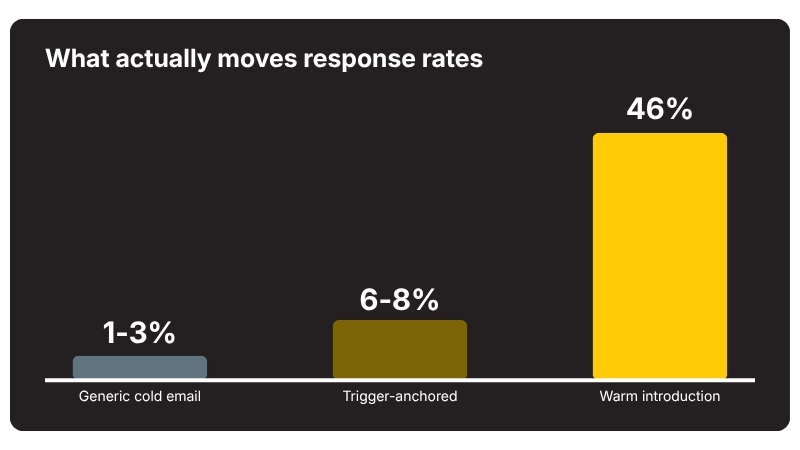
Swapping in a first name and company logo isn’t personalisation, not really. What actually works is anchoring your first message to something specific. Think a funding round, a new leadership hire, a regulatory shift, or a competitor’s move. That one change alone can be the difference between a 3% response rate and something closer to 8%.
The test is simple: could this exact message have been sent to five other executives in five other companies? If yes, it’s not personalised enough yet. A message that references something that happened at their company in the last 30 to 60 days, and connects it to a specific business outcome, reads completely differently to an executive than a templated opener ever could.
Tactic 3: Master the Multi-Channel Sequence: Email, LinkedIn, and Phone
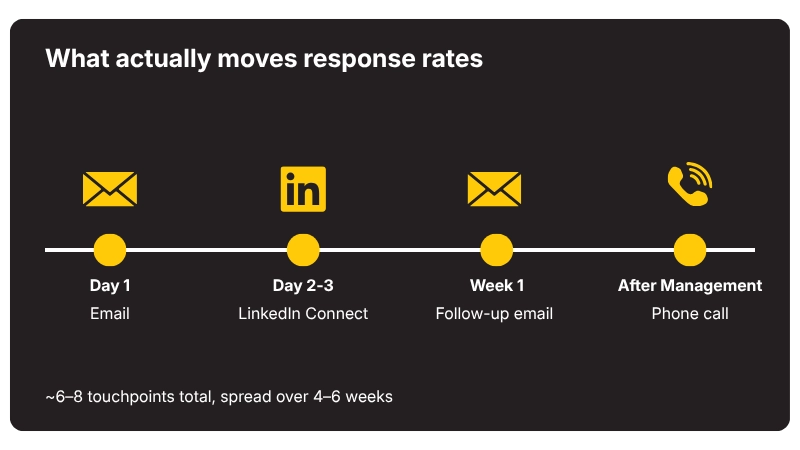
No single channel is going to reliably reach a guarded executive by itself. The sequences that work best pair a personalised email with a LinkedIn connection or InMail, then follow up with a call. Spread this across roughly 6 to 8 touchpoints over 4 to 6 weeks. Each channel builds on the last, so by the third or fourth touch, the name feels familiar instead of random.
A sequence that tends to work well in the Australian market looks something like this: personalised email on day one, a LinkedIn connection request two or three days later, a short follow-up email in the first week, then a phone call once there’s been some engagement, even just a LinkedIn profile view or a connection accepted. From there, space touches out over the following weeks rather than front-loading everything at once.
Tactic 4: Work the Executive Assistant, Not Around Them
Executive assistants aren’t obstacles you need to get around. They’re often the person who decides whether your message ever gets seen. Be upfront about who you are and why you’re reaching out. Just ask how they’d prefer the request come through. EAs who feel respected are a lot more likely to pass a message along than block it.
Most EAs manage requests through a specific process, and that process varies by office. Some prefer email with a clear subject line stating the purpose. Others prefer a phone call first to explain the reason before anything gets sent in writing. Asking directly which they’d prefer, rather than guessing, is usually the fastest way to find out.
Tactic 5: Leverage warm introductions and peer referrals
Nothing beats a warm introduction. Response rates through a trusted connection can hit 46%, compared to just 1 to 3% for cold email. So before you launch a cold sequence, check your network first. It’s worth seeing whether anyone on your team, or in your existing client base, already has a real connection to the person you’re trying to reach.
This is often underused simply because it takes a bit more coordination. A quick way to surface these connections: search LinkedIn for the target executive and check mutual connections, then ask your existing clients or partners directly whether they know anyone at the target company. Even a loose connection, like a shared university or previous employer, can be enough to open a warmer conversation than cold outreach ever will.
Tactic 6: Outsource to Specialist C-Suite appointment setters
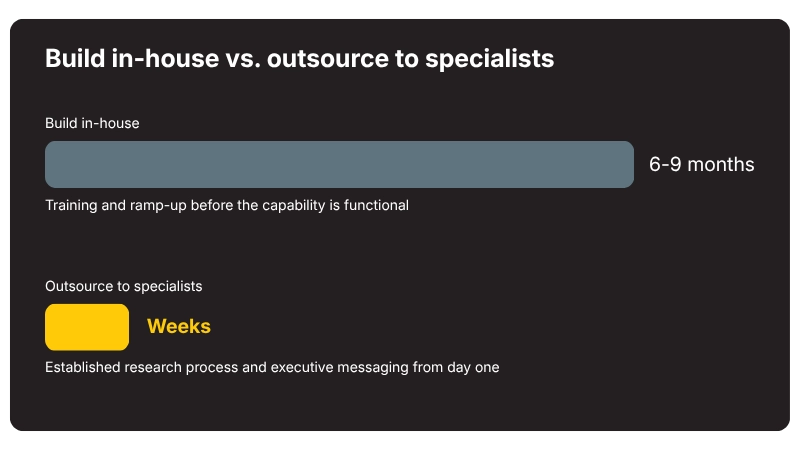
Building an in-house team capable of consistently booking C-suite meetings takes real time. It’s usually somewhere between 6 and 9 months of training and ramp-up before it’s working well. Specialist appointment-setting agencies already have the research process and executive-level messaging worked out. This is exactly the kind of high-ticket, relationship-driven appointment setting that suits guarded executive audiences. Qualified meetings can start showing up on the calendar within weeks rather than months.
This tends to make the most sense in two situations: when you’re entering a new market without existing relationships to draw on, or when your internal team’s time is better spent on the meetings themselves rather than the research and prospecting that gets you there.
Ready to hand this off to a team that does it daily?
Cold Email vs LinkedIn for C-Suite Outreach in Australia: What Works
Both channels have their place. But they perform pretty differently depending on who you’re targeting and the context around the outreach.
| Factor | Cold Email | |
| Average response rate | 1–3% (up to 6–8% when trigger-anchored) | ~10% InMail baseline |
| Best for | Detailed, trigger-specific first touch | Building familiarity before a direct ask |
| AU executive behaviour | Often filtered by EAs or spam tools | High LinkedIn penetration among AU executives |
| Strongest use case | Formal introduction with a clear business reason | Warming up a contact before email or a call |
| Compliance note | Must meet Spam Act 2003 requirements | Governed by LinkedIn’s own platform policies |
When Cold Email Outperforms LinkedIn for Executive Targets
Email tends to work best when you’ve got a specific, well-researched trigger to work with. It also gives you room to include more context than a LinkedIn message comfortably allows. And it leaves a clear, documented trail, which helps if you end up looping in an assistant later.
When LinkedIn Is the Stronger Channel for AU Enterprise Buyers
LinkedIn use among Australian executives is noticeably higher than in a lot of other APAC markets. That makes it a solid channel for building some familiarity before you go in with a direct ask. A connection request with a short, relevant note often lands better as a second touch than starting cold.
How to Get Past the Gatekeeper: Strategies That Work in Australia
Getting past the gatekeeper really isn’t about avoiding the executive assistant at all. It’s about winning them over instead. Be upfront from the first message: who you are, which company you’re with, and why you’re reaching out. Reference something specific about what the executive is dealing with right now, rather than the generic ask for “15 minutes of their time.”
Ask the EA how they’d prefer the request come through, then actually follow that process. It sounds small, but it builds credibility fast, mostly because so few vendors bother doing it at all. Over time, EAs notice who’s working with them instead of trying to get around them. They tend to become a lot more willing to flag your name when something relevant comes up.
Expert Tip:
Don`t pick one channel over the other. The sequences that perform best in the Australian market tend to run email and LinkedIn side by side. Email makes the business case, and LinkedIn does the relationship-building. Then a phone call brings it together once there's some recognition on the other end.
Measuring C-Suite Meeting Success: Key Metrics for AU Sales Teams
Getting the meeting booked is only half the job. The metrics you track afterward tell you whether the strategy is actually working or just generating activity that looks good on paper.
Show Rate Benchmarks for Enterprise Meetings in Australia
A solid show rate for confirmed C-suite meetings usually reflects genuine interest rather than a polite yes. If executives are confirming but not showing up, that’s often a sign of one of two things. Either the original ask didn’t have a clear enough business reason behind it, or the meeting got booked too far out without a proper reconfirmation.
A structured confirmation and follow-up sequence closes most of that gap. Here’s how to optimise your appointment funnel from booking through to show-up.
Meeting-to-Opportunity Conversion: What Good Looks Like
Not every meeting is going to turn into a sales opportunity, and that’s fine. But if a lot of your booked meetings are going nowhere, it’s worth taking a closer look. Check how those meetings are being qualified before they get locked in. A tighter process filters for real fit earlier, so the meetings that do make it onto the calendar actually have a shot at progressing.
When to Outsource Your C-Suite Meeting Booking in Australia
Outsourcing tends to make sense in a couple of situations. One is when your internal team is spending a lot of time on research and outreach without seeing a fair return in booked meetings. The other is when you’re moving into a new vertical or region where you don’t already have executive relationships to lean on.
Specialist C-suite appointment-setting partners bring a real head start here. They come with outreach infrastructure already built, researchers who know how to do the homework, and messaging frameworks designed specifically for executive audiences. For Australian enterprise sellers who want to move pipeline forward without a lengthy internal build, this is often the quicker, lower-risk route.
If cost is part of what’s holding you back, it’s worth seeing what appointment setting typically costs in Australia before deciding either way.
If you’re weighing up build versus buy, Callbox Australia’s enterprise appointment setting services are built around exactly this kind of guarded, senior-level outreach. Our team handles the research, the multi-channel sequencing, and the relationship with the EA, so your reps can spend their time on conversations that are actually worth having.
Weighing up build vs. outsource for your C-suite outreach? Get in touch with our team to talk through your enterprise targets.
Frequently Asked Questions
Why is it so hard to book meetings with C-suite executives in Australia?
Australian enterprise C-suite buyers are heavily guarded. Executive assistants filter requests, spam filters block cold emails, and executives themselves ignore anything that feels templated. Cold outreach generates roughly 3% response rates at the executive level, compared to 46% for warm introductions through trusted connections.
What is the best channel to reach C-suite decision makers in Australia?
Multi-channel outreach consistently outperforms any single channel. The most effective combination pairs a personalised, trigger-anchored email with a LinkedIn connection or InMail. Follow up with a direct phone call. Researching the executive’s priorities beforehand is non-negotiable.
How do I get past the gatekeeper when trying to reach a CEO or CFO?
Treat the executive assistant as a strategic ally, not an obstacle. Be transparent about who you are. Reference something specific about the executive’s agenda or a recent company development. Then ask for guidance on the right way to submit a meeting request.
How long does it typically take to book a C-suite meeting in Australia?
Enterprise sales cycles in Australia average 3 to 6 months from first outreach to a qualified meeting. This depends on solution complexity and the seniority of the target. Multi-channel sequences with 6 to 8 touchpoints over 4 to 6 weeks achieve the highest conversion rates.
Should I outsource C-suite appointment setting or build an in-house SDR team?
For most B2B companies targeting Australian enterprise decision-makers, outsourcing to a specialist is faster and lower risk. Building an internal SDR capability for C-suite meetings typically takes 6 to 9 months of training and ramp time. Specialist agencies can begin delivering qualified meetings within weeks.
What response rate should I expect from cold outreach to Australian C-suite executives?
Cold email to C-suite executives in Australia typically generates a 1 to 3% response rate. Highly personalised, trigger-anchored outreach can reach 6 to 8%. LinkedIn InMail averages around 10% as a baseline. Warm introductions through trusted connections can reach as high as 46%.
What do Australian CEOs and CFOs look for before agreeing to a sales meeting?
Australian C-suite executives prioritise relevance and respect for their time above all else. They respond to outreach that shows clear understanding of their business challenges. They want a precise reason for the meeting and a stated outcome, not a product pitch.